
OER 2:
Collective Conflict Mapping
Fostering Reflection on Matters of Transparency in Educational Technology and AI Usage
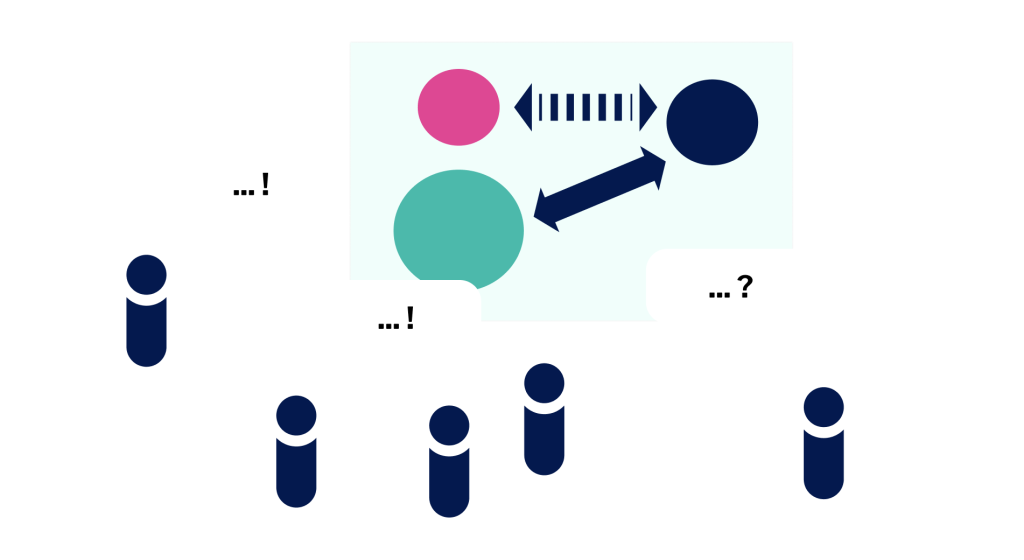
Why Educators and Learners should Discuss Matters of Transparency in Educational Technologies together
Transparency as discussed in the EU guidelines refers to the degree to which the functioning, purposes, limits, and consequences of technological systems are made visible and intelligible to those affected by them. Importantly, transparency goes beyond access to information or technical explanations, but rather more broadly concerns who knows what, who controls disclosure, and who bears the consequences of opacity.
In educational contexts, transparency becomes problematic when (the usage of) AI and data-driven systems shape learning, assessment or governance while remaining partially or fully unreadable to educators, learners and institutions. When decisions are embedded in proprietary platforms, automated classifications, or unclear institutional policies, educational actors are asked to trust systems they cannot meaningfully scrutinize.
Transparency is not a stable feature of a technology, but a site of tension where interests, constraints, and accountability collide. In education, these tensions are based on power and dependency among actors such as teachers, students, institutions, platform providers, policymakers, and many other actors shaping the scene. Therefore, the goal of this OER is to make these tensions visible, rather than treating transparency as a purely technical or compliance-related issue.
How to Co-Create Collective Conflict Maps to Enhance Transparency in Educational Tech and AI Use
This OER applies conflict mapping as a method to explore transparency in educational technology and AI use. The conflict mapping hereby focuses on a specific scenario (provided scenarios are Authorship and Intellectual Property Rights as well as Learning Analytics and Identification of Students at risk, but you can also create your own scenario). Based on the chosen scenario, the actors and their interests are disentangled step by step and placed in relation to each other on the map, with ongoing discussions in the group: which actors have which types of resources, expertise, legal power, and social legitimacy?
- Actors are presented as circles, with their size indicating the actors’ influence. Sizes can be adapted throughout the process.
- Relations between actors are presented through different arrow shapes.
- Textboxes can be added to specify the relation.
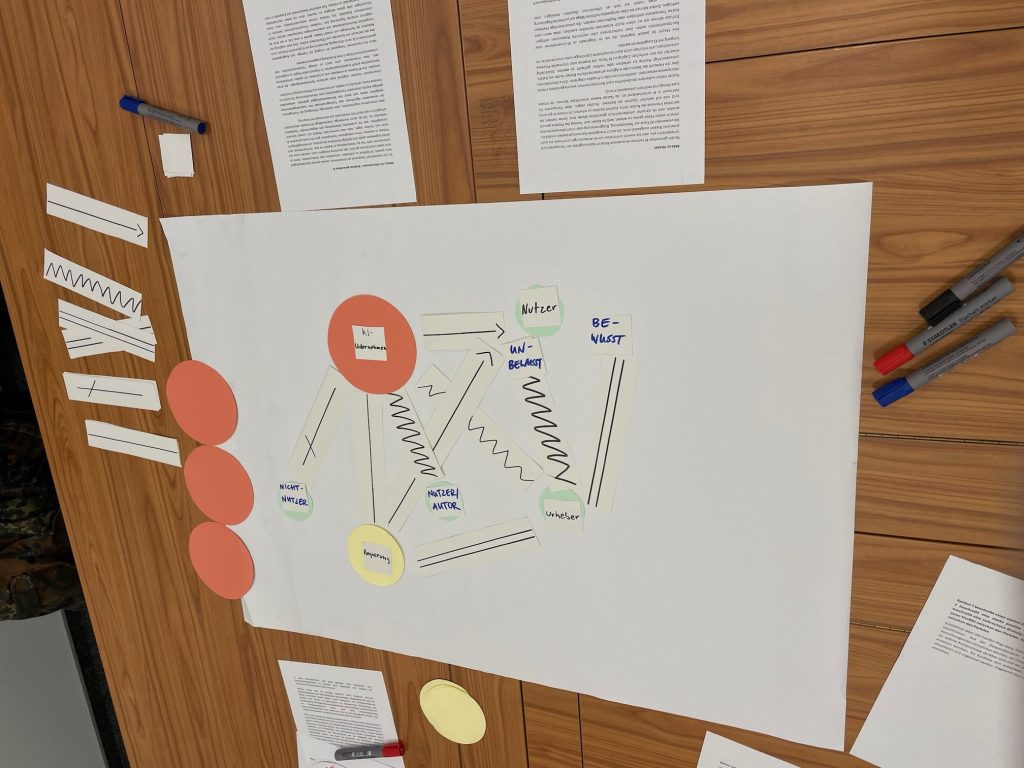
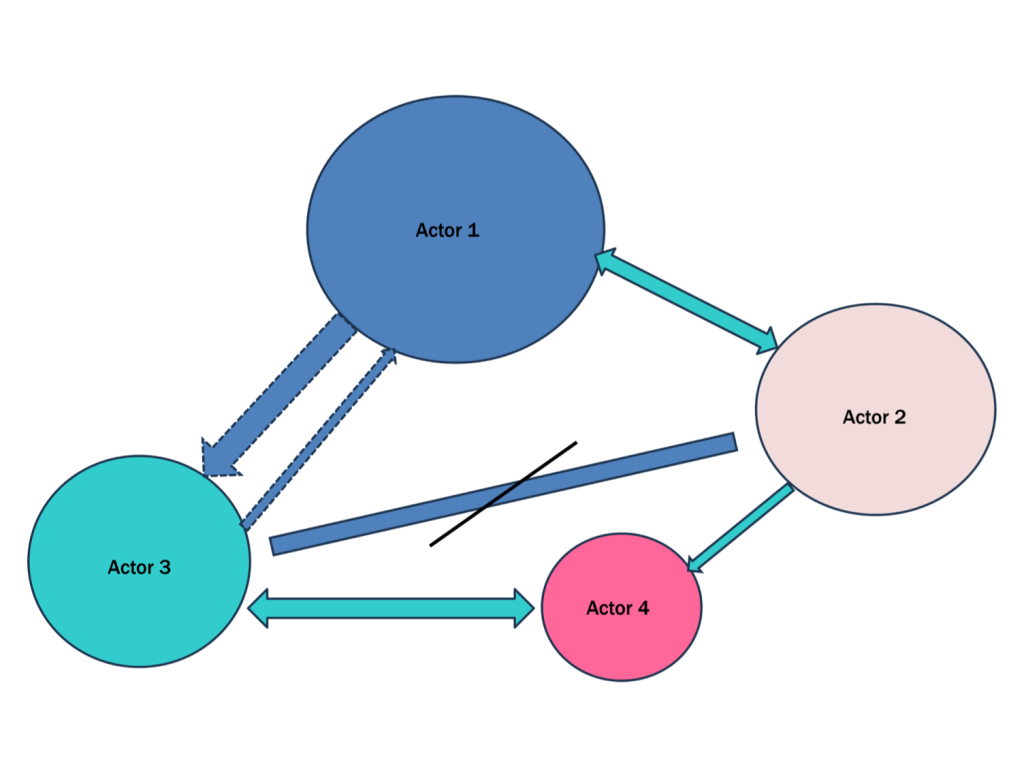
To support participants’ change of perspective, short statements from the different actors are provided throughout the process. The last stage includes the active imagination of different futures, provoking a critical scrutinization of participants’ agency for change and engagement, also within existing constraints.
This OER includes:
- A tutorial with a conflict mapping example
- Detailed pedagogical guidelines
- All materials needed for your classroom (powerpoint template; scenarios)
Let’s get started!
This OER offers two prepared scenarios for you to directly apply in your context:
- “Authorship and intellectual property rights” discusses transparency-related conflicts and relations between authors, users, big tech providers and governmental actors;
- “Learning Analytics and Identification of Students at risk” discusses transparency-related conflicts and relations between students, educators, university leadership and data protection officers.
Hence, both scenarios target different levels, with scenario 1 being more situated at the macro level, and scenario 2 more on the micro level of education. Of course, you can adapt both scenarios to your needs or create your own scenario (see instructions in pedagogical guidelines).
All necessary materials as well as a detailed guideline for implementing conflict mapping in your classroom can be downloaded here:
Tutorial: How conflict mapping works
Our tutorial shows an example conflict map creation to give you an idea on how this method can foster discussion and reflection on questions around transparency in educational uses of technology:
This OER is licensed via Creative Commons Attribution-NonCommercial-ShareAlike 4.0 International (CC BY NC SA 4.0). The license requires that reusers give credit to the creator. It allows reusers to distribute, remix, adapt, and build upon the material in any medium or format, for noncommercial purposes only. If others modify or adapt the material, they must license the modified material under identical terms.