
Try our Open Educational Resources (OERs) to Explore Technology and AI Usage in Education
On this page, you find three OERs that target different EU principles for ethical technology and AI usage in education:
- Transparency;
- Human Agency and Oversight;
- Diversity, Non-Discrimination and Fairness
Rather than prescribing answers or offering checklists, the OERs support users to explore the relational entanglement, ethical ambiguities and emotional nature of technology and AI usage in education. In other words, they invite users to deliberately slow down for a moment in order to collectively unpack ethical matters from various perspectives, and to find collective answers to the question of what ‘good ethics’ in the context of their practice could be.
Through scenarios, narratives, and visual prompts, the OERs hereby help to anchor ethical questions in concrete situations and link to the living experience of educators and students.
The OERs were developed in the context of the ETH-TECH project. They build on intense co-creative work of the ETH-TECH partners with students from Helmut-Schmidt-University (HSU) Hamburg, as well as on the extremely valuable feedback and input from several testing sessions.
Do you want to learn more about the Open Educational Resource (OER) approach? Check this link! OER also means that users should always feel free to adapt and translate the content to their needs.
Now it’s your turn!
Explore our three OERs:
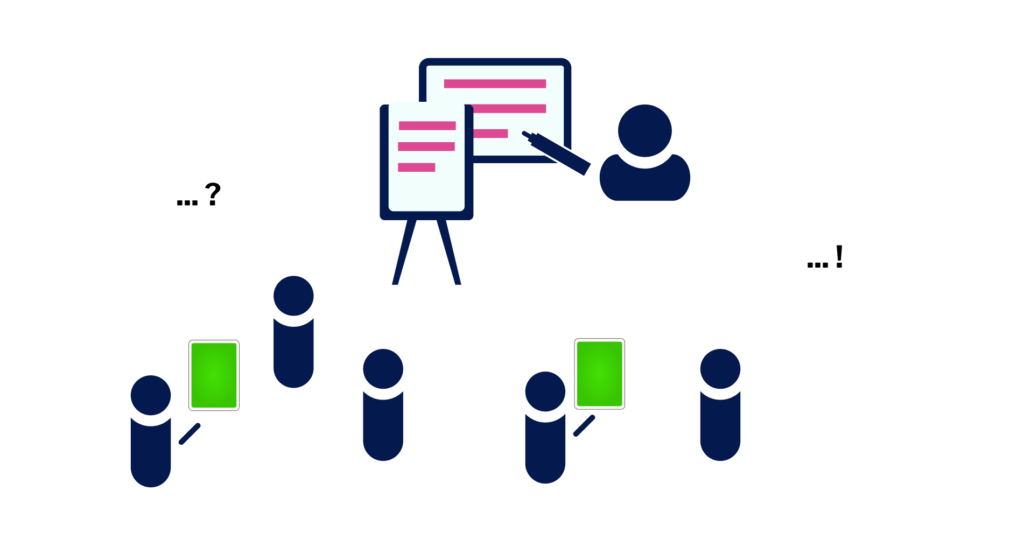
1. Empathetic Contract Creation
Developing Collective Rules for Supporting Human Agency and Oversight in Educational Technology and AI Usage
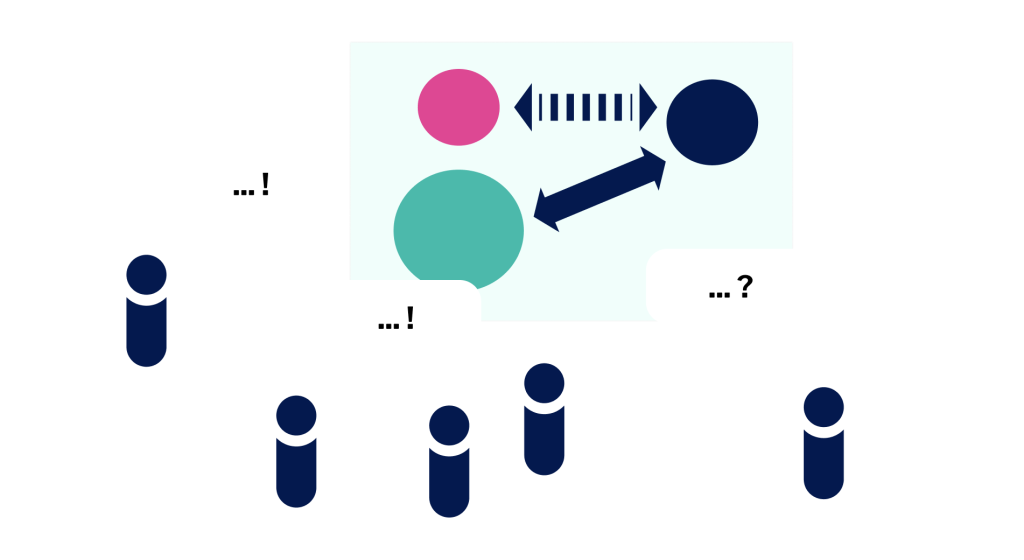
2. Collective Conflict Mapping
Fostering Reflection on Matters of Transparency in Educational Technology and AI Usage

3. Storyboarding
Imagining Fair and Non-discriminatory Educational Technology and AI Usage
Why we need more than guidelines and checklists
Over the past years, societies have become increasingly aware of the many ethical risks and challenges of technology usage in educational contexts. As a response, we see growing numbers of digital competence frameworks or guidelines to support educators and students in navigating technologies and AI in socially and ethically responsible ways. However, such frameworks and guidelines tend to remain at a high level of abstraction and risk being interpreted as mere instruments of procedural compliance (‘ticking boxes’), rather than prompting intense ethical engagement. Also, educators feel overwhelmed with carrying most responsibility for making ‘ethical choices’ around technology and AI, while being confronted with technological opaqueness as well as lack of time and support. These problems were also clearly mirrored in our ETH-TECH Awareness Raising Sessions.
(Re)Focusing on the complexity, ambiguity and emotionality of technology and AI ethics
Guidelines and checklists detract our attention from the relational entanglement, ethical ambiguities, but also the deeply emotional nature (e.g., pride, anxiety, shame or curiosity) that characterize educators’ or students’ engagement with technology and AI in practice. In other words, ethical behavior cannot be ‘taught’ in the same way as any other method, but it can rather be described as a fragile and contested space of inquiry that must be cultivated, facilitated, and protected. And we need ‘mediation tools’ which support exactly this.
Towards an ongoing development of better educational futures: make the OERs your own and contribute to the community!
Importantly, the OERs presented on this page do not only foster the collective inquiry of technology and AI ethics. They also support users to imagine (‘What if…?’) and develop (‘We collectively agree that…’) concrete future visions and practices around technology and AI that specifically fit users’ context and concerns. In line with this idea, all OERs are modular and can be adapted and reworked according to various contexts. They can be used in higher education classrooms, particularly in educator education programs, as well as in professional or faculty development contexts (e.g., workshops; strategy development). Furthermore, each OER can be deployed independently or combined with others (or with your own resources/material). Through this fostering of open, adaptable and reusable OER practice, we invite educators and students to become part of a European community of explorers, carers and learners with regards to the imagination and realization of future ethical technology usage in education.
Interested in other ETH-TECH material and stories?
Is the ethics of AI and educational technologies taught in Europe?
Explore our analysis of university syllabi across the four ETH-TECH countries.
How do educators and students discuss AI ethics in practice?
Discover insights from our Awareness Raising Sessions across Europe.
What principles should guide ethical technology usage in education?
Explore the ETH-TECH framework and its EU ethical foundations.
How ethical is technology usage in your context?
Try our self-reflection tools for educators and institutions.
How to promote ethical technology usage?
Explore stories from the ETH-TECH journey.
Looking for research outputs?
Access all published ETH-TECH reports.

This OER is licensed via Creative Commons Attribution-NonCommercial-ShareAlike 4.0 International (CC BY NC SA 4.0). The license requires that reusers give credit to the creator. It allows reusers to distribute, remix, adapt, and build upon the material in any medium or format, for noncommercial purposes only. If others modify or adapt the material, they must license the modified material under identical terms.